Chronic ankle instability does not announce itself with dramatic pain. More often, it feels like a subtle give on uneven ground, a nagging worry climbing stairs, a hesitation when you change direction on a playing field. For many, it starts with a sprain that never truly resolves. Weeks pass, swelling goes down, but confidence never returns. That repeated give, the rolling to the outside, and the lingering soreness with weight bearing are the hallmarks. Left unchecked, those small lapses add up to bigger problems, from cartilage damage inside the joint to peroneal tendon issues along the outer ankle.
I have cared for runners who feared curbs more than marathons and tradespeople who avoided ladders because a foot placement could decide their day. Instability is not just an athletic problem. It can derail work, parenting, and the simple pleasure of walking without bracing for the next misstep.
What is actually unstable
The ankle relies on a trio of lateral ligaments for restraint, with the anterior talofibular ligament (ATFL) and calcaneofibular ligament (CFL) doing most of the work during a typical inversion injury. When they tear, they may heal long and lax. Muscles and tendons try to compensate, but reflex timing lags. You may recover strength on a machine yet still fail a simple single-leg balance test because proprioception, the ankle’s internal GPS, is dulled.
The picture is rarely isolated. I see patterns. People with cavus foot shape, a high arch with a slight heel tilt toward varus, load the outer ankle more and tend to roll. Others carry a background of generalized ligamentous laxity. Some develop peroneal tendon fraying from repetitive snapping over the fibula. Inside the joint, repeated sprains can shear the cartilage and bone on the talus, leaving osteochondral lesions that ache with impact and create clicking or even locking. Anterior ankle impingement can develop where bone spurs form and pinch soft tissues with dorsiflexion. On the flip side, a flatfoot posture and posterior tibial tendon dysfunction load the inner ankle and midfoot, shifting mechanics and sometimes masking lateral instability until both sides hurt.
Nerve symptoms deserve attention as well. Tarsal tunnel syndrome and other nerve entrapments can mimic or accompany ankle problems. Numbness, burning, or nighttime foot pain changes the workup and the plan. Not every unstable feeling is purely ligamentous, which is why a thorough exam matters.
Signs that it is time to be evaluated
A fresh sprain deserves early care, but the threshold for a specialist visit lowers if you have already been down this road. Recurrent sprains, instability when walking on grass or gravel, clicking in the ankle with pivoting, swelling after injury that lingers beyond a couple of weeks, or stiffness and limited mobility when you try to regain range all point to a deeper issue. Locking episodes, barefoot walking pain on first steps out of bed, or weight bearing pain that forces you to cut activity are red flags. If you feel uneven weight distribution through your foot or notice your shoe wear is lopsided, mechanics may be pushing you toward repeat trouble.
Occupational demands change urgency. A firefighter with ladder work, a warehouse employee clocking 10,000 steps on concrete, a nurse on long shifts, or anyone whose workplace injuries could sideline income needs a plan that protects both healing and livelihood.
How a foot and ankle surgeon approaches the problem
Clinic visits begin with the story. What positions cause trouble, how often, and what did you try after past sprains. Then the hands-on part. Palpation along the ATFL and CFL, peroneal tendons behind the fibula, and the joint line pinpoints pain generators. The anterior drawer and talar tilt tests gauge laxity side to side. I watch gait, sometimes barefoot and then in your work or sport shoes, to pick up postural issues and abnormal foot alignment. A quick look at leg lengths and pelvic posture often reveals subtle imbalances that push you into risky angles.
Imaging is targeted. Standard ankle radiographs screen for fractures, bone spurs, and alignment. Stress views can quantify laxity. MRI shines when we suspect peroneal tendon tears, cartilage damage, osteochondral lesions, or synovitis in the joint. Ultrasound, in skilled hands, can catch tendon subluxation during motion. If you report numbness or burning, a nerve exam and occasionally nerve studies help differentiate tarsal tunnel syndrome or localized entrapments.
Some cases belong squarely in the category of complex foot cases. A cavus foot with rigid hindfoot varus, an old syndesmosis injury, or a prior failed foot surgery changes both diagnosis and treatment. For those situations, second opinions are healthy. A foot and ankle surgeon for second opinions should explain findings in plain language and welcome your questions. When surgery is on the table, clarity beats salesmanship. If you are seeking a foot and ankle surgeon for revision ankle surgery after a disappointing first outcome, bring the operative report and images. Understanding what was done guides what should be done next.
Non-surgical solutions that work when you work them
Most patients improve without surgery if we address the right levers. Time alone is rarely enough. A strategic plan tends to include a brace or external support early, targeted therapy to repair reflexes, and mechanical corrections through footwear and orthotics.
A good physical therapy program is not a generic ankle sheet. It is staged. Early on, swelling control and gentle range restore motion. Very soon, balance work begins in safe positions. The peroneal muscles get priority because they are the first responders to an inversion roll. We train quick foot, not just strong foot. Closed-chain movements simulate daily life. As pain calms, plyometric progressions and agility ladders reintroduce the demands of sport. Proprioception drills continue even after pain is gone, because that is where confidence returns.
Orthoses help when anatomy is tilted against you. A custom orthotics evaluation makes sense if you have a cavus foot or clear rearfoot varus. The goal is to bring the ground up to you, to reduce the lever that flips you outward. Off-the-shelf lateral wedges sometimes do enough. If you tried inserts and they never felt right, that is an orthotic failure case worth revisiting. Small changes in posting or contour can be the difference between comfort and a dustbin. Footwear matters too. A stable heel counter, the right last, and avoiding high heel related pain triggers are part of the plan. I often ask patients to bring their top two pairs of daily shoes and their sport shoes so we can look at wear patterns and match choices to goals.
Inflammation control plays a support role. Short courses of anti-inflammatories, topical gels, and occasional ultrasound-guided injections into the joint for synovitis can calm a flare, but none of those fix laxity. They buy time to make therapy count. For athletes, return to sport planning is deliberate. We map milestones rather than dates, starting with straight-line running, then cutting in predictable drills, and finally reactive play. Patients who deal with occupational foot pain get similar load planning so they can phase back to full duty without setbacks.
Non-surgical care usually runs 8 to 12 weeks of structured work. If instability dates back years, expect closer to 12 to 16 weeks of disciplined rehearsal to rebuild a reflex arc that has been asleep. There is no shame in bracing during this process. Many high-level athletes tape or brace as preventative strategy even when healthy. The goal is stability without dependency, but the path there can include supports.
When surgery earns its place
The threshold for surgery is not a single failed sprain. It is the pattern. If you have three or more inversion injuries in a year despite good non-operative care, if you still feel frequent giving way, or if imaging shows clear ligament attenuation with or without cartilage damage, you have likely crossed into surgical territory. People with mechanical risk factors like rigid cavus alignment often do better with earlier surgery because braces and therapy cannot fully neutralize the lever arm that keeps flipping the ankle.
The mainstay operation for lateral ligament instability is a Broström repair, a direct repair of the ATFL and often the CFL, usually with a retinacular reinforcement known as the Gould modification. In the setting of poor tissue quality or in heavier patients and collision athletes, I often augment the repair with a suture tape internal brace that shares load while the ligament heals. When prior surgery failed or native tissue is too thin, tendon reconstruction with grafts can recreate the ligaments. The best reconstructions respect original anatomy so that motion stays natural.
Arthroscopy frequently accompanies ligament work. A camera inside the joint allows us to clean scar bands, address synovitis, and treat osteochondral lesions. Options for cartilage depend on size and location. Small, stable lesions respond to microfracture. Larger, unstable patches may need fixation or osteochondral grafting. If anterior ankle impingement from bone spurs limits dorsiflexion, arthroscopic debridement restores motion and reduces that pinch you feel on stairs.
Peroneal tendon problems ride along in a significant subset. Long-standing snapping or pain behind the fibula may reflect a tear or subluxation. During the same sitting, we can repair a split tendon, deepen a groove, or reconstruct a torn retinaculum to keep tendons in place. Alignment corrections matter too. A rigid cavus foot sometimes needs a lateralizing calcaneal osteotomy to bring the heel under the leg and offload the repaired ligaments. Ignoring structure can doom a perfect repair to fail under old forces.
Total ankle replacement and ankle fusion surgery do not treat instability by themselves, but they have a place when joint degeneration advances to arthritis after years of giving way. Those are bigger decisions with different goals. Most instability patients, especially those seeking a foot and ankle surgeon for chronic ankle instability, never reach that point if we intervene thoughtfully.
What to expect from foot and ankle surgery
Outpatient procedures are the norm. You arrive, meet anesthesia, and go home the same day in most cases. Incisions are modest, and when arthroscopy is included, some work occurs through 4 to 5 millimeter portals. You will not bear weight on that foot for a short period initially, then progress to protected weight bearing in a boot. A nerve block often provides pain relief through the first night and morning. After that, elevation and scheduled pain management plans keep discomfort manageable. Patients with circulation related issues or diabetic foot complications require added planning for wound healing concerns, but most do well with careful technique and follow-up.
Here is a compact preparation guide that I give patients the week before surgery.
- Set up your home base on one floor with a clear path to the bathroom, and gather cold therapy, pillows, and a small table for elevation. Arrange time off work based on your job demands, and submit paperwork early to avoid delays. Pick up medications in advance, including pain control, anti-nausea, and stool softeners to counter opioid side effects. Practice crutch or scooter use on flat ground, then a few steps, so the first day post-op feels familiar. Bring your brace, boot, or shoe to the surgery center if we have already fitted one, and wear loose pants that fit over dressings.
Patients often ask for a foot and ankle surgery preparation guide that is pages long. In reality, the essentials fit on a card. Good planning beats long checklists.
The recovery timeline in real terms
Recovery after ligament reconstruction happens in phases. The details flex based on the exact procedures performed, your tissue quality, and your work or sport, but these timeframes capture the core milestones.
- Weeks 0 to 2: Rest, elevate often, and protect the repair in a splint or cast. Non-weight-bearing with gentle toe curls. Keep the dressing dry, watch for abnormal swelling or concerning pain, and begin isometric contractions when cleared. Weeks 2 to 6: Transition to a boot. Gradual protected weight bearing starts as pain allows. Begin physical therapy with range of motion, careful eversion control, and scar care. Stationary bike with the boot on is often allowed. Weeks 6 to 12: Move to a brace and supportive shoe. Strength work ramps up, especially peroneals and hip abductors. Proprioception training advances from two-leg to single-leg tasks. Light impact may start late in this window depending on swelling and control. Months 3 to 6: Agility and plyometrics re-enter, first in straight lines, then with predictable changes of direction. Return to sport planning becomes individualized. Many recreational athletes return between 4 and 6 months if control is solid. Months 6 to 12: Performance and confidence refine. High-impact athletes and those in cutting and jumping sports may not feel fully “themselves” until 9 to 12 months, even with excellent objective testing.
Expect the ankle to swell with activity for several foot and ankle surgeon NJ months. That is normal physiology, not failure. Nighttime foot pain lessens as daytime load becomes more organized. A fast recovery protocol does not mean rushed. It means removing barriers and sequencing rehab intelligently. Enhanced rehab programs that integrate physical therapy coordination with clear milestones produce better outcomes than ad hoc visits.
What before and after really looks like
A high school outside back came to me after four sprains in a year. He could not trust his push-off when shielding and dreaded wet turf. Exam showed a soft endpoint on anterior drawer and a heel that tilted inward at rest. MRI confirmed ATFL attenuation and a small osteochondral lesion on the talus. He had done good therapy but still rolled on minor pivots.
We performed an arthroscopy to treat the cartilage spot, a Broström repair with internal brace augmentation, and a small lateralizing calcaneal osteotomy to correct his hindfoot alignment. He was non-weight-bearing for two weeks, then in a boot, and in structured therapy by week three. At eight weeks he transitioned to a brace and shoe. At four months, we began controlled cutting. He returned to full match play at five and a half months. Two seasons later, he still tapes on rainy days, more for ritual than need. Before was holding his breath every time he planted. After is playing free with awareness, not fear.
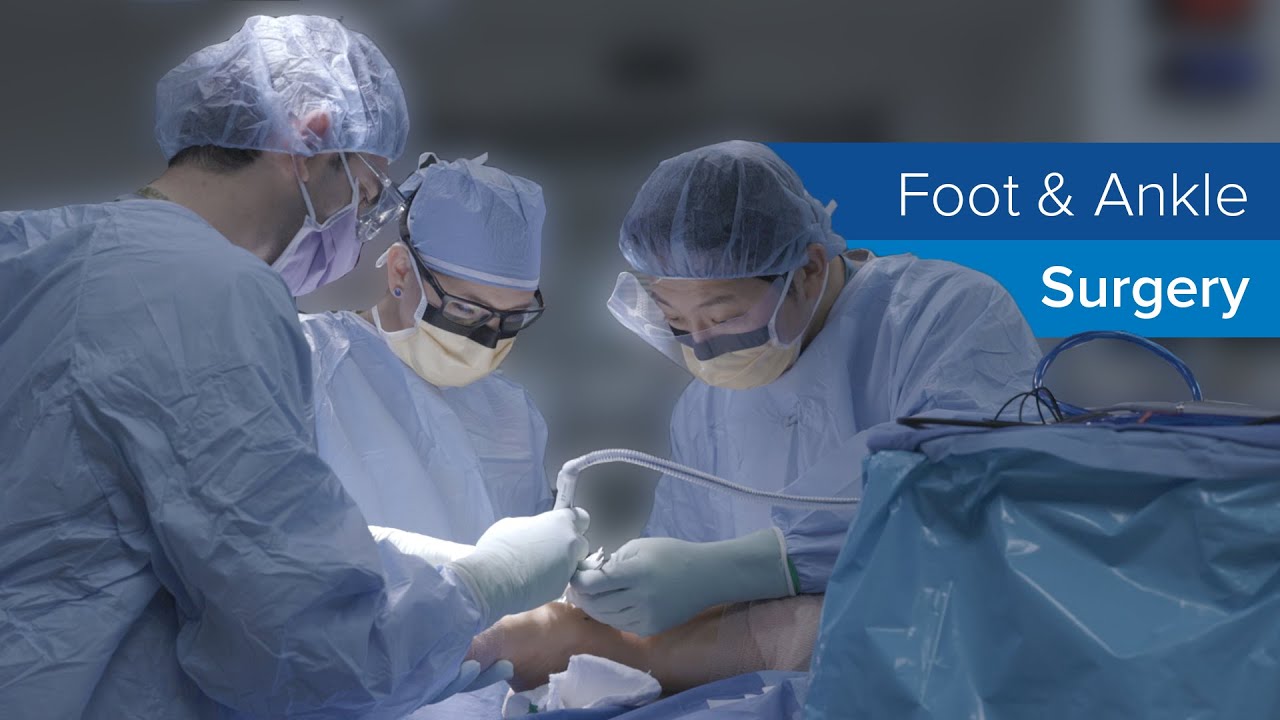
Not everyone needs alignment correction, and not everyone returns to contact sport. I share this to illustrate that layered problems often need layered solutions. A foot and ankle surgeon for complex foot cases thinks this way from the start.
Risks, complications, and how to avoid them
Surgery is never zero risk. Wound issues are uncommon but more likely in smokers and patients with diabetes or vascular concerns. Infection rates in clean elective ankle procedures remain low, typically well under 2 percent, and are manageable with prompt treatment. Nerve irritation can present as numbness around scars or superficial sensitivity. Most cases settle with time and desensitization, but persistent pain should prompt evaluation for true nerve entrapment. Deep vein thrombosis is rare in healthy individuals yet worth preventing with early movement, hydration, and risk-based prophylaxis.

Scar tissue issues can limit motion if early rehab stalls. On the other hand, pushing eversion too soon can stretch a fresh repair. Balance matters. Post surgical complications are best prevented through communication. If something feels off, say so early.
The bigger long-term risk of untreated instability is joint degeneration. Repeated microtrauma accelerates cartilage wear. Bone spurs and cysts in foot or ankle bones can follow. The earlier we restore stable mechanics, the better we preserve the joint. A foot and ankle surgeon for long term joint preservation thinks several seasons ahead, not just to the next game or quarter.
When surgery falls short the first time
Every surgeon has a revision story. Scarred tissues, missed diagnoses, or a return to high-impact activities too soon can lead to failure. When facing a failed foot surgery, start fresh. We look for reasons rather than blaming biology. Did a cavus alignment persist. Was there an unrecognized peroneal tendon tear. Did an osteochondral lesion remain symptomatic. Was a nerve entrapped in a scar band. Revision plans target the cause. Sometimes that means upgrading soft tissue quality with a graft, sometimes correcting alignment, and sometimes addressing pain drivers like impingement or lingering cartilage damage.
A foot and ankle surgeon for revision ankle surgery should be candid about goals. You may not regain pre-injury sprint speed at 10 weeks, but you can return to a very high level with patience and precision.
Choosing the right partner for care
Experience matters, but the fit matters more. Seek a foot and ankle surgeon for chronic ankle instability who listens first, examines second, and orders tests last. Ask how often they perform ligament reconstruction and how they decide on augmentation. If your case involves peroneal tendon issues or osteochondral lesions, ask about their approach to combined procedures. For unusual anatomies or rare foot conditions, comfort with deformity correction, cavus foot correction, and arch reconstruction is useful. You do not need a robotic assisted surgery specialist for an instability repair, but a surgeon comfortable with advanced surgical techniques and outpatient procedures can translate that precision to your case.
If you have doubts, getting a second opinion is healthy. Surgeons who do this every day welcome thoughtful questions. The best outcomes often come from the best conversations.
Prevention as a habit, not a phase
Stability is trainable. Even after surgery, the ankle needs regular rehearsal. Ten minutes twice a week of balance work and peroneal conditioning pays long-term dividends. Footwear assessment once or twice a year keeps you out of shoes that lift your heel too far or narrow your base. For athletes, injury prevention strategies include steady progressions after breaks, not jumping back to maximal cutting drills after a long off-season. For those with workplace demands, schedule micro-breaks and vary tasks to reduce repetitive stress injuries.
Postural correction and addressing leg length imbalance effects reduce asymmetric loads through the ankle. Custom orthotics evaluation is not just for pain, it can be for performance and even load distribution. If you find yourself with morning heel pain or new standing discomfort, treat it early. Early intervention care is cheaper, faster, and less painful than playing catch-up.
A final word on expectations
Most patients do well with a thoughtful non-operative plan or with surgery when indicated. What to expect from foot and ankle surgery varies with your anatomy and goals, yet a few themes hold true. You will need help for the first week, you will move better by the second month, and you will feel more like yourself between the fourth and sixth months. The foot and ankle surgery recovery timeline is not a race against a calendar but a steady climb through clear waypoints. Before and after photos tell part of the story. The fuller picture is you stepping off a curb without thinking, chasing your child across the yard, or cutting hard on familiar turf with your weight centered and your mind calm.
If you carry a history of recurring sprains, if you recognize the patterns described here, or if you have nagging doubts after a prior treatment, start the conversation. A careful evaluation, a tailored plan, and a clear-eyed view of trade-offs can restore trust in an ankle that has been letting you down. That trust is the real result we aim for, built day by day through sound mechanics, good decisions, and the right repairs when needed.